AI ESTIMATING SOFTWARE FOR MACHINE SHOPS

AI-Powered Estimating That Actually Learns Your Shop.

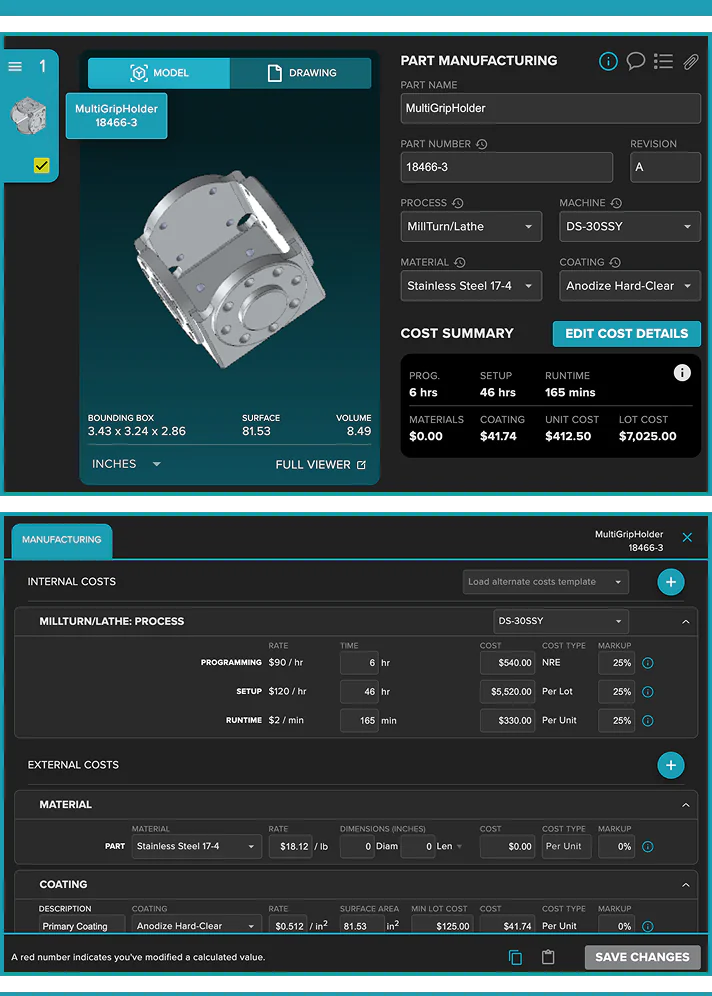
Machine Research uses machine learning — trained on your real job data — to generate accurate estimates in seconds. Not a formula. Not rules. A model that gets smarter as your data grows.

Analyzes actual 3D part geometry — not just 2D drawings

Trains on your real actuals, not industry averages

Your data never leaves AWS GovCloud — never sent to an external AI system

If your estimating AI can't learn from your shop, it isn't AI.

Most estimating tools claim to use AI but rely on static rule sets — assigning fixed time values to individual features: so many seconds per hole, so many minutes per pocket. It sounds precise. The problem is, it isn't:

  • Miss a feature the system can’t classify, and it never gets priced — your margin pays for it on the shop floor
  • The estimates are built on generic assumptions, not your real job history — so they never reflect how your shop actually runs
  • Once configured, they never update — so every time your processes, equipment, or team changes, the estimates drift further from reality
  • Most shops spend months configuring them and still never get them right

You deserve software that actually learns — not one that calls static rules ‘AI.’

Machine Research was built from inside a machine shop by engineers who understood that real ML was finally mature enough to solve the quoting problem properly. The result is a system that trains on your actual recorded job data, analyzes 3D geometry the way an experienced machinist reads a part, and gets sharper as your data grows.

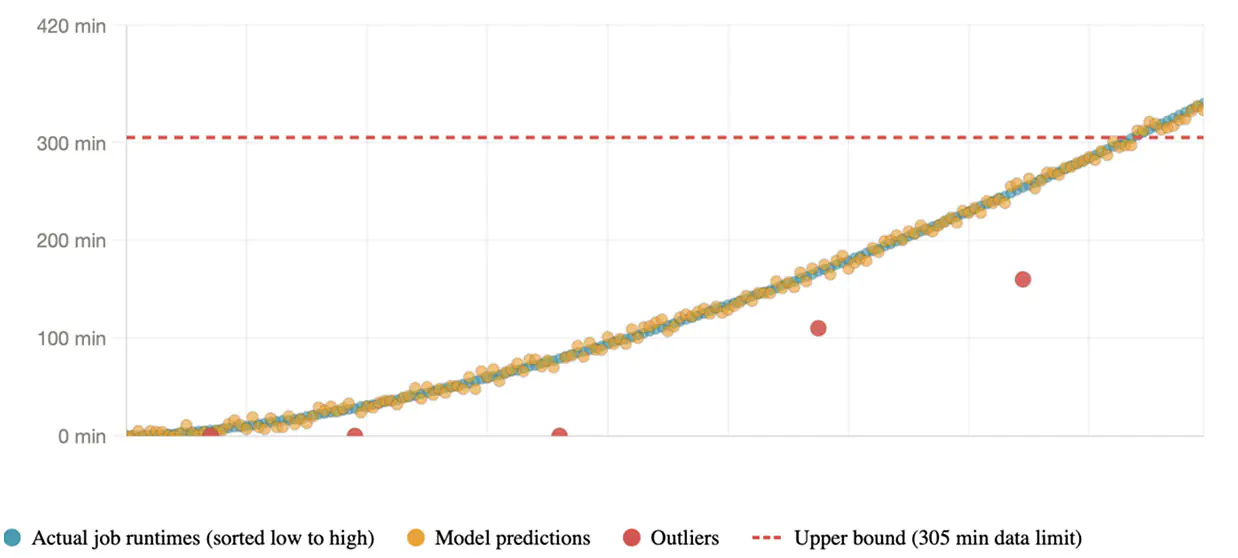
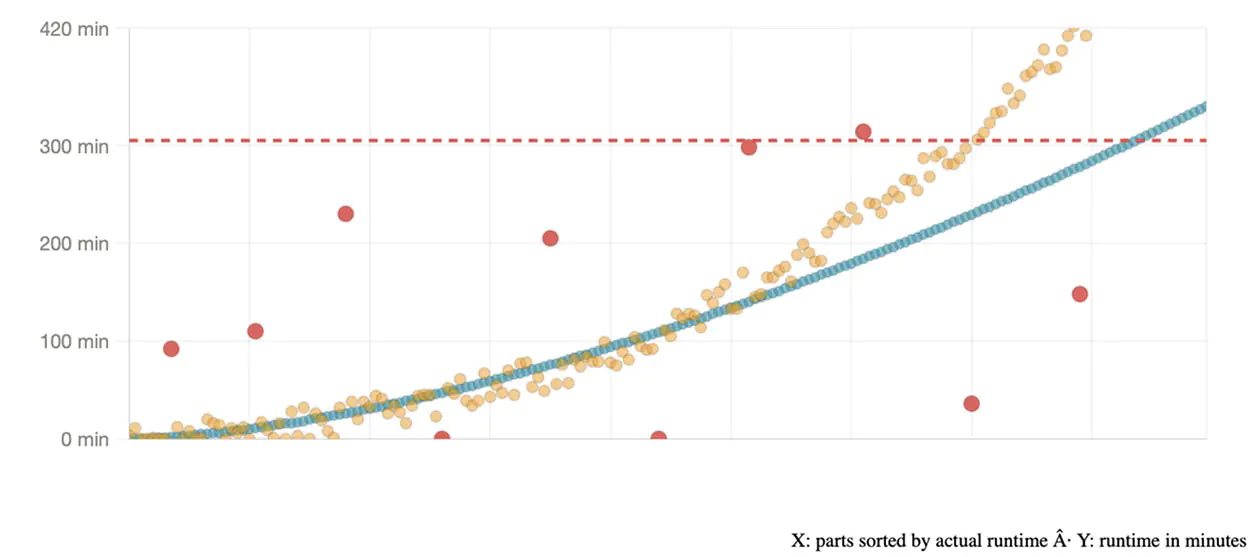
The proof: ML vs. linear regression on real shop data

Machine Research Machine Learning Model

trained on your real job actuals

Tight fit - few outliers

Standard rule-of-thumb formula

MRR × Volume + Surface Area × Finishing Rate

Poor fit - many outliers

This is what genuine machine learning looks like in a machine shop

Computational Geometry Engine

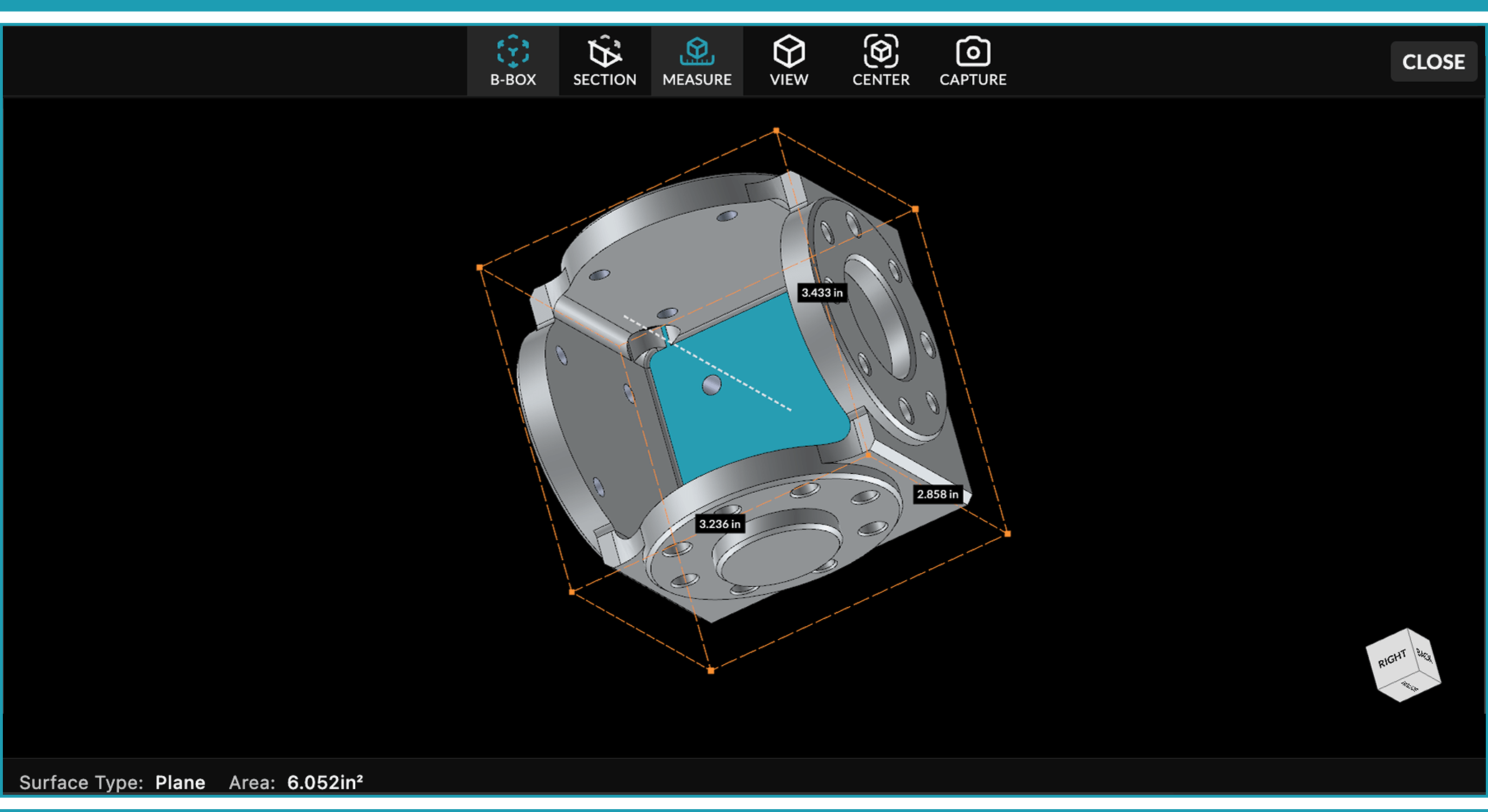
Reads the actual 3D model. Then extracts removed volume, surface area, pocket depth, hole count, and other geometric complexity indicators that are highly predictive of real machining time. This level of geometric analysis is not possible with feature-based or equation-based tools.

ML Model Trained on Your Actuals

Starts with a foundation model built from real shop data. Feed it your actuals — actual programming, setup, and run times — and it retrains to your specific shop: your machines, your materials, your team’s pace. The more real job data you provide, the more accurately it reflects how your shop works.

Closed-Loop Job Feedback

When a job is completed, the actual time and cost data can be fed back into the model. Unlike static rule-based systems that never change, Machine Research’s estimates get sharper as your job history grows. Your data, your model, your results.

Secure ML — No External AI

Machine Research uses machine learning, not a large language model like ChatGPT. Your proprietary part data, pricing logic, and job actuals never leave our secure AWS GovCloud environment — and are never used to train any external system.

Unlike feature-based estimating tools, Machine Research actually learns.

Feature-Based Estimating Tools

Fixed time rules per feature — set up once, never updated

Only estimates geometry it can classify — misses everything else

Rules drift further from reality as your shop changes

Expensive to calibrate; most shops never configure them properly

Months of setup, multi-year contracts

Machine Research

Learns from your real job data and retrains over time

Analyzes full 3D geometry — nothing gets missed or lumped

Gets sharper as your data grows — reflects how your shop actually runs

Fast to deploy, intuitive to use — most shops quote in days

Up and running quickly, no long-term commitment

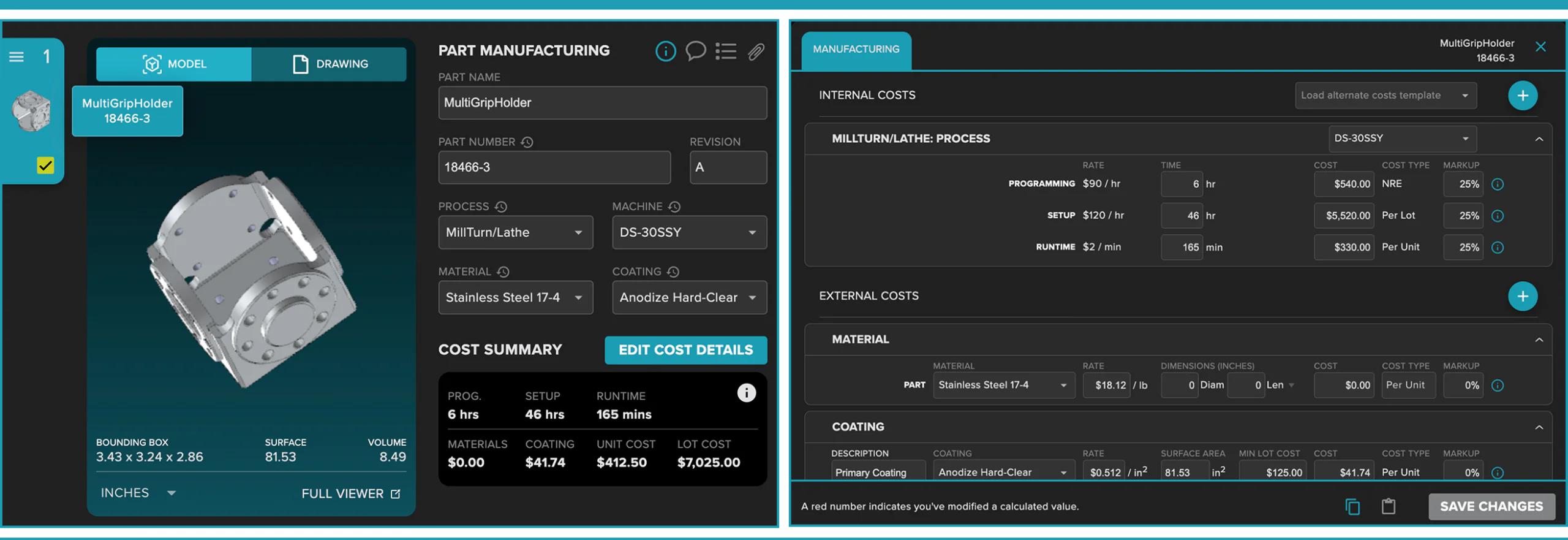
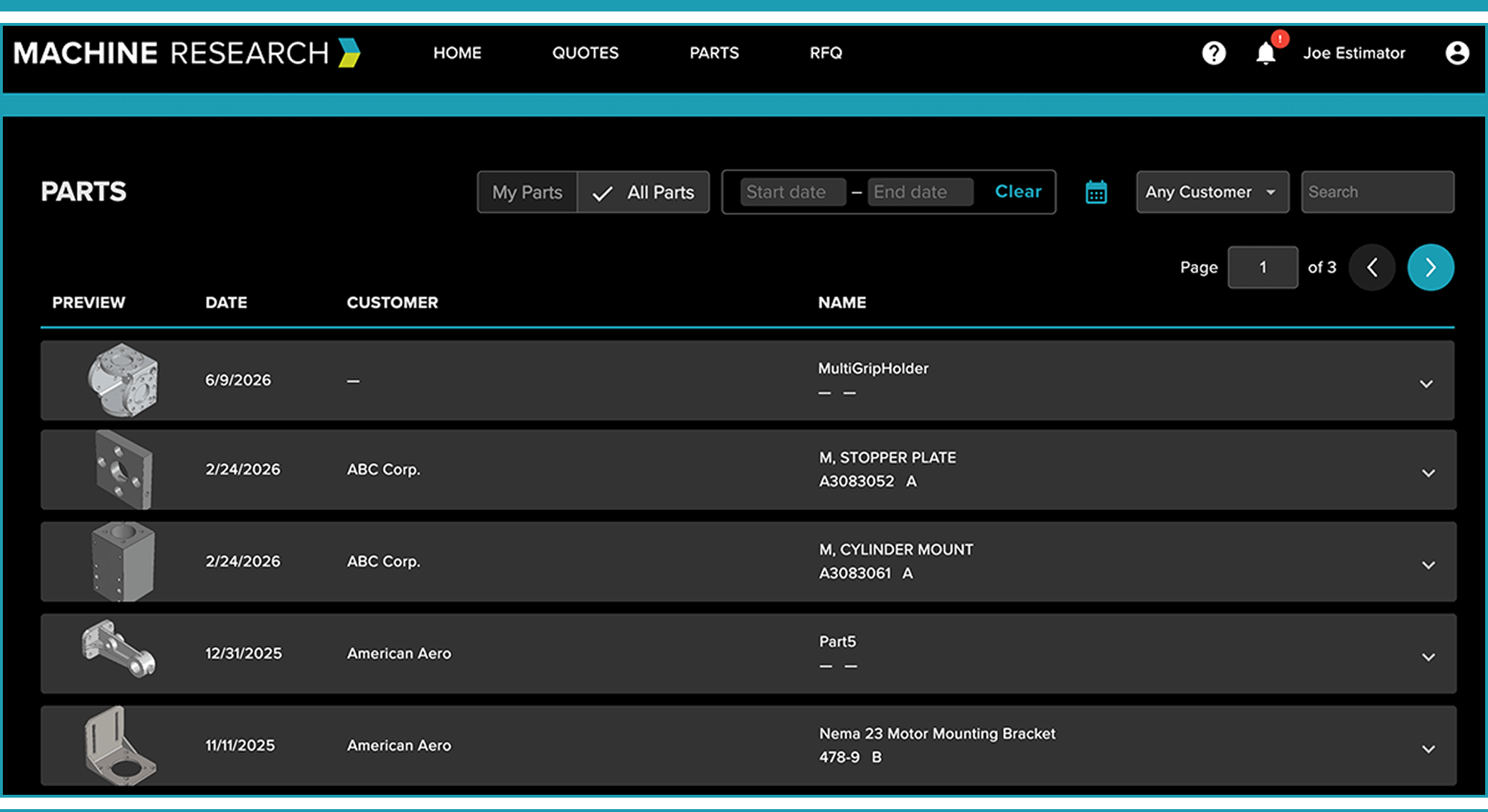
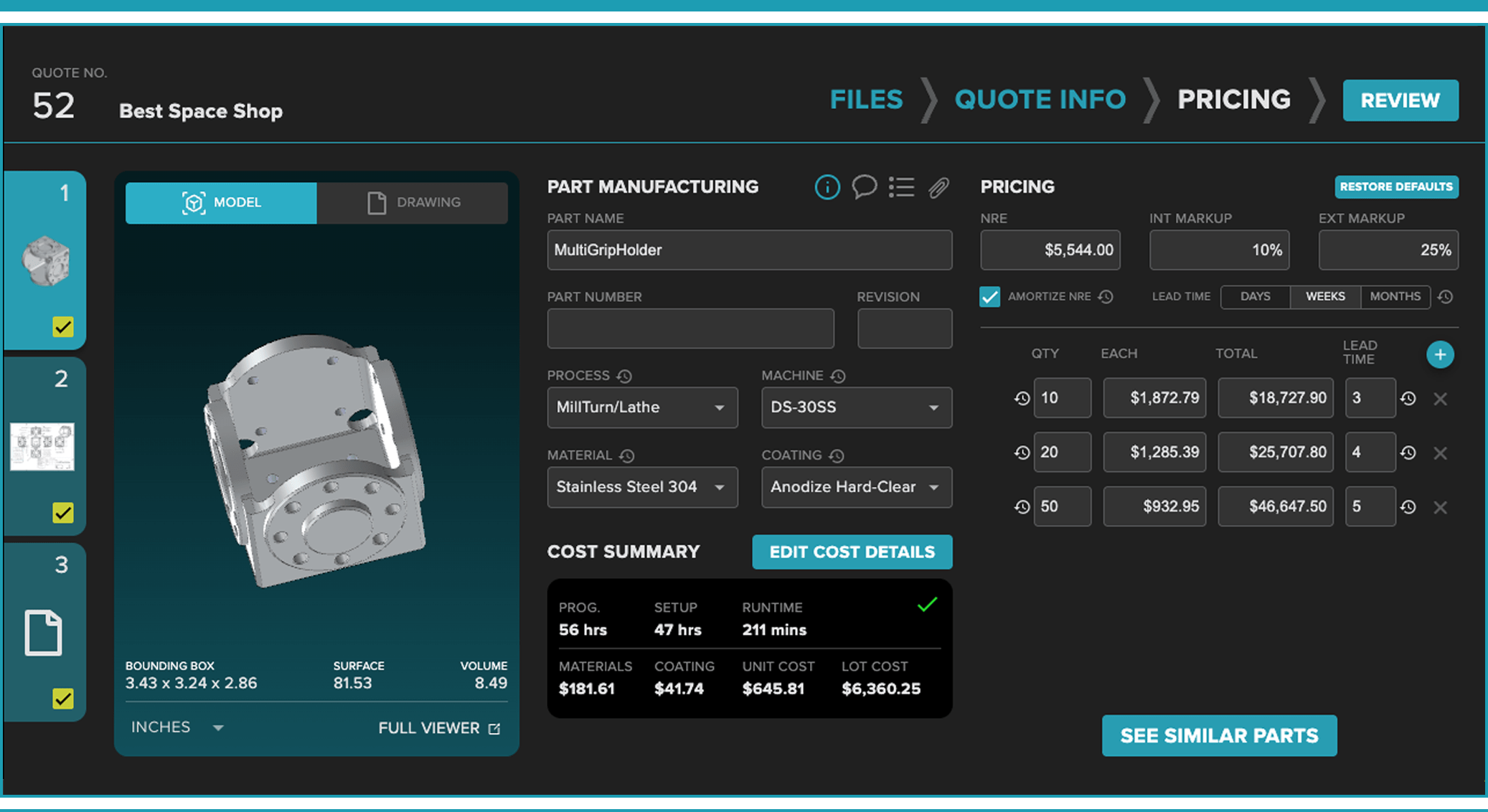
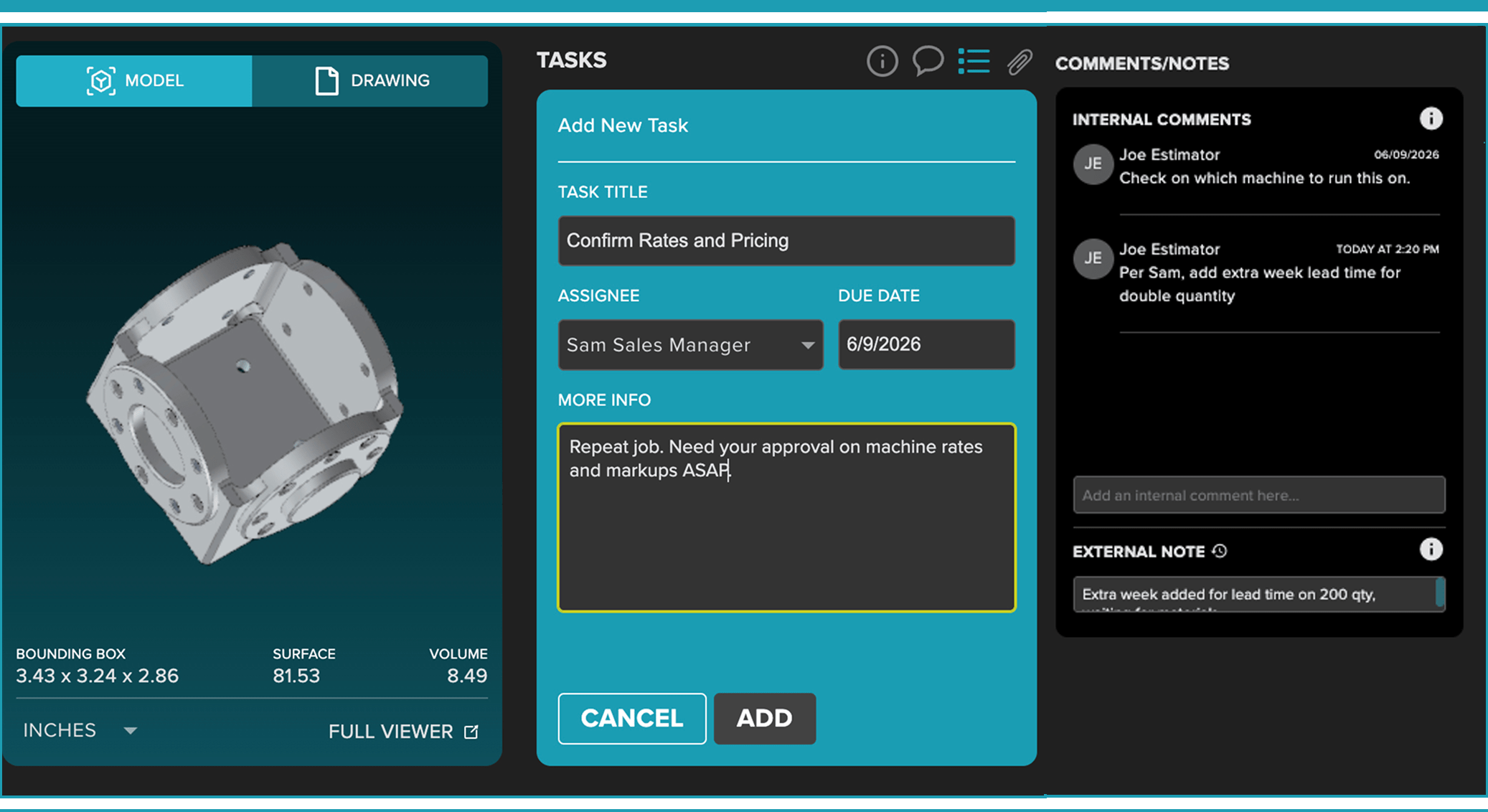
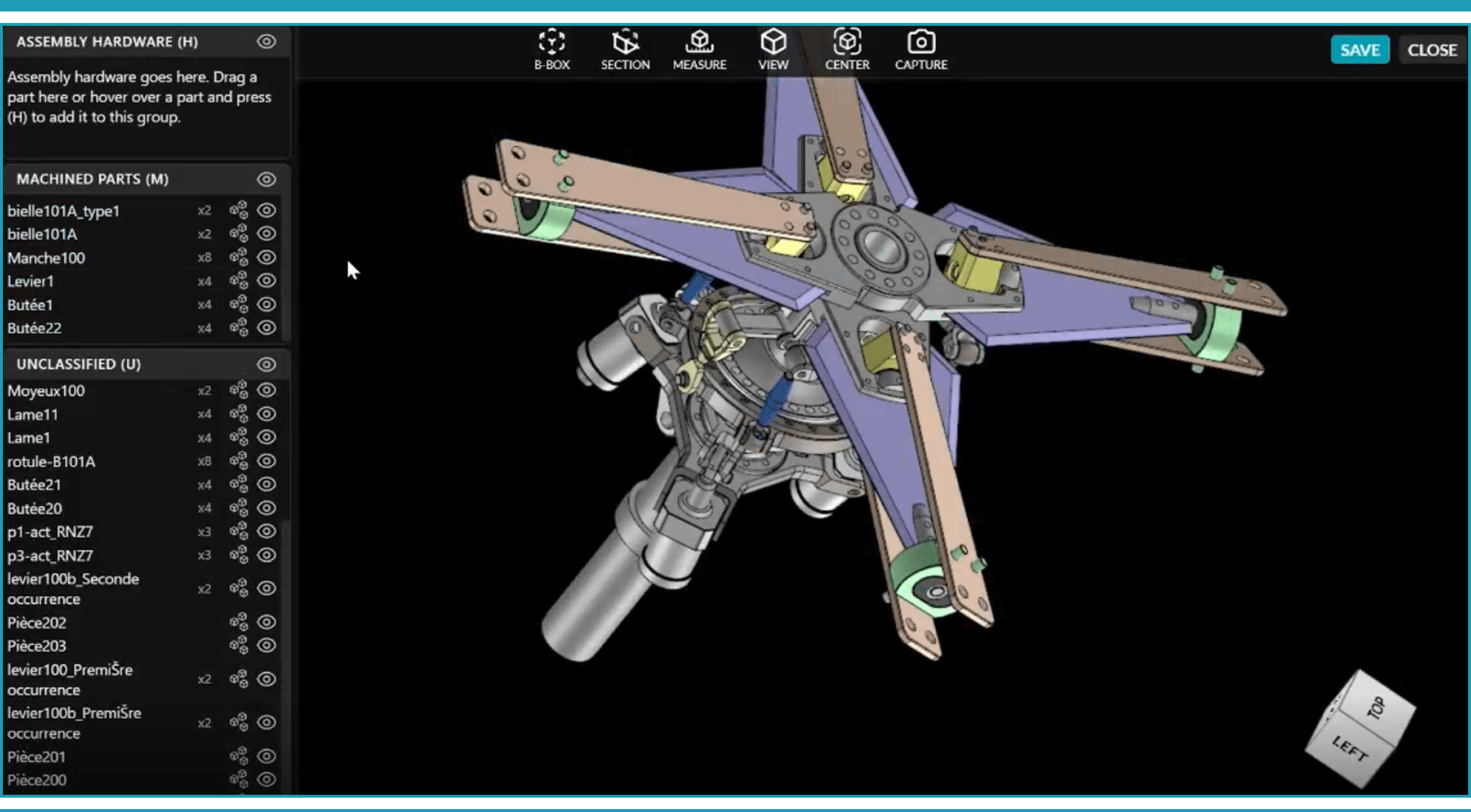
Everything your shop needs to quote faster —
in one connected platform.

Estimators who’ve used both say the difference is real.

Give your shop the speed and consistency today’s buyers expect.

No steep learning curve. No heavy setup. No waiting around for the one person who ‘knows how to quote.’ Try Machine Research with your own parts before you commit to anything.

FAQS

It is machine learning. Most estimating tools use feature-based rules — assigning fixed time values to individual part features, like seconds per hole or minutes per pocket. Machine Research trains a ML model on your real recorded job actuals, so it learns the nuances of your specific machines, materials, and team. The model can be retrained as new job data comes in, getting more accurate as your data grows.

Machine Research reads the actual 3D CAD model — extracting removed volume, surface area, pocket depth, hole count, complexity, and other geometric features. These features feed into a machine learning model trained on your historical job actuals to predict programming, setup, and run times. The result is an estimate in seconds that reflects how your shop actually performs, not a static rule set built around generic feature types.

Machine learning requires data to become accurate for a specific shop. When you start your trial, the model begins with a foundation built from real shop actuals across a range of CNC work — which is already far more nuanced than a feature-based rule set. But shops with highly specialized processes, unique materials, or proprietary machining methods will see accuracy improve significantly once the model has been trained on their own historical job data. We make this easy: send us your actuals and we’ll calibrate your instance before you go live.

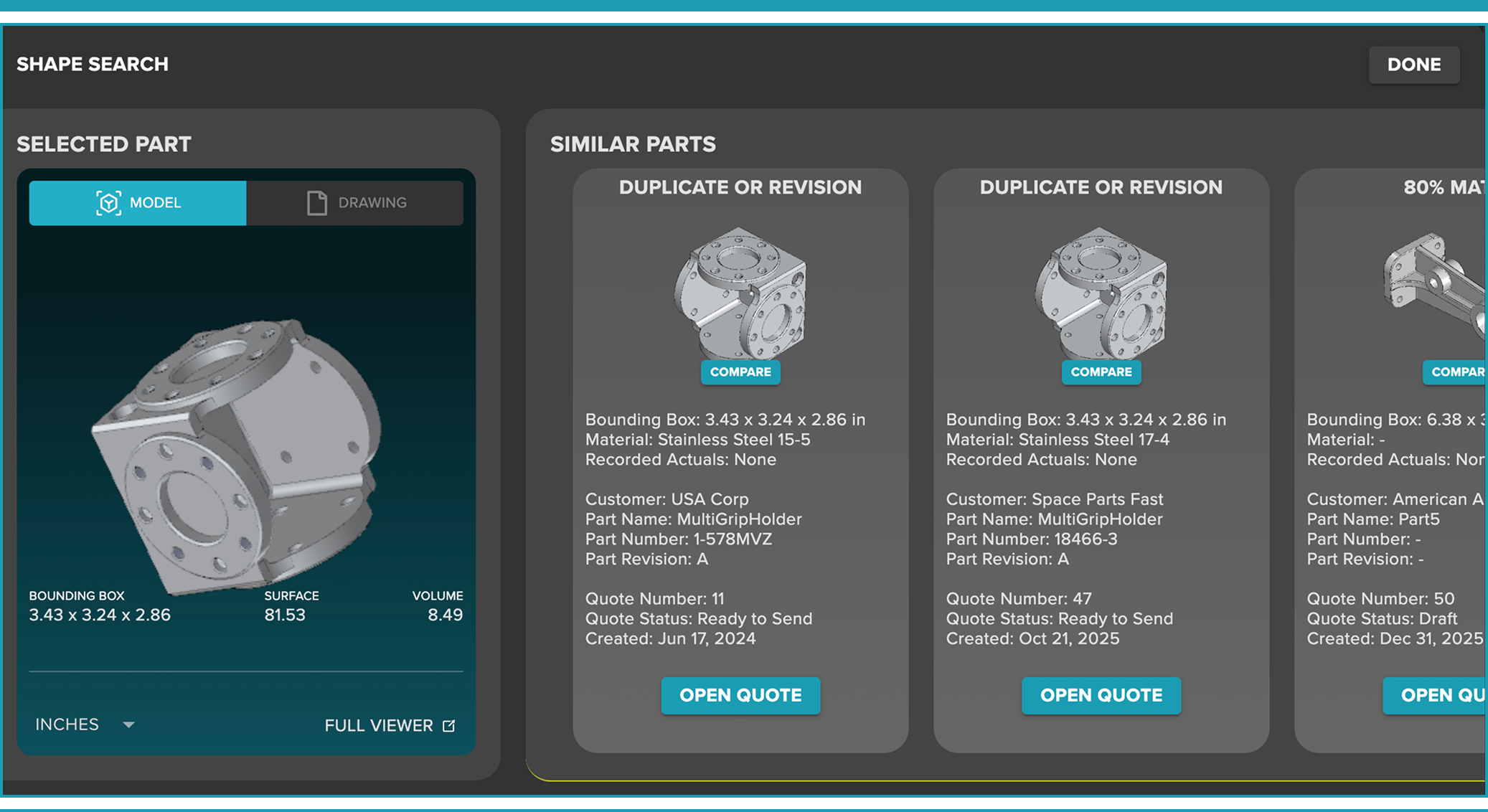
Yes. Machine Research is designed to give your estimators full control. You can use the AI estimate as a starting point, adjust individual time values, or — for shops that prefer to begin without AI estimates — disable the AI layer entirely and enter your own times. The platform’s other capabilities (3D Part Viewer, ShapeSearch, Part Library, professional quoting) are fully available regardless of whether you use the AI estimating layer.

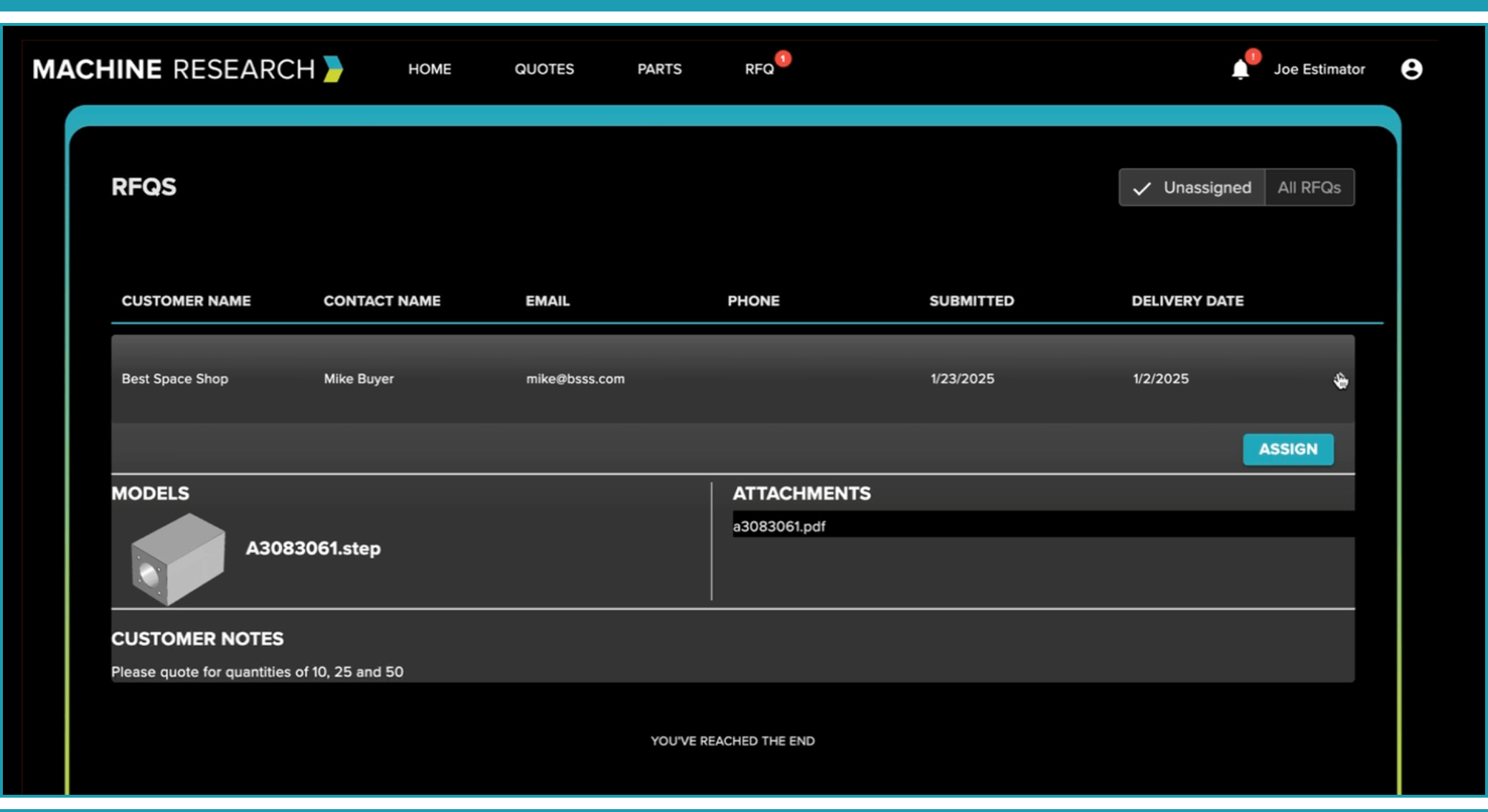
General AI tools like ChatGPT are not built for machine shop quoting — they have no understanding of your part geometry, your machines, your pricing logic, or your historical job data. Machine Research is purpose-built: it reads actual 3D CAD files, applies ML trained on real shop actuals, stores all job history in a centralized part library your whole team can access, and keeps every file and pricing detail within your secure AWS GovCloud environment. A general AI tool cannot open a STEP file, cannot quote a part, cannot remember your last job, and cannot protect your customers’ IP from being used to train external models. Machine Research does all of this — and gets sharper as your data grows.

Yes — when you feed it your data. As you record actual programming, setup, and run times for completed jobs and submit them for retraining, the model becomes more accurate for your specific shop. The more real job data you provide, the more closely the model reflects how your shop actually runs.

No. Machine Research uses machine learning, not a large external model like ChatGPT. Models are built in-house using your data. Your proprietary part files, pricing logic, and job actuals never leave our secure AWS GovCloud environment.

AI performs best on parts similar to those it has been trained on. Highly unique features, extreme tolerances, or uncommon processes still benefit from human review — which is why Machine Research is designed to support experienced estimators, not replace them. For shops with very specialized work, sharing historical job data early allows the model to calibrate faster and deliver more useful estimates from the start.